 listicle
Luxury Boutique Hotels in Bhutan: Top Stays for 2026
Table of Contents
- Why Luxury Boutique Hotels in Bhutan Redefine High-End Travel
- Amankora: The Original Multi-Valley Lodge Circuit
- Six Senses Bhutan: Wellness and Sustainable Design Across Five Valleys
- COMO Uma Paro, Gangtey Lodge and Dhensa Resort: Intimate Retreats for Couples and Nature Lovers
- Bhutan Spirit Sanctuary, Naksel and Zhiwa Ling: Wellness, Eco-Luxury and Heritage
- Are Boutique Hotels in Bhutan Covered by Travel Insurance?
- Best Time to Visit Bhutan for Luxury Travel
- Building a Luxury Travel Itinerary in Bhutan
- Frequently Asked Questions
Last Updated: October 4, 2026
Why Luxury Boutique Hotels in Bhutan Redefine High-End Travel
Luxury boutique hotels in Bhutan are small, design-led properties that pair five-star hospitality standards with a strong sense of place, and they now anchor the country's high-end travel scene.
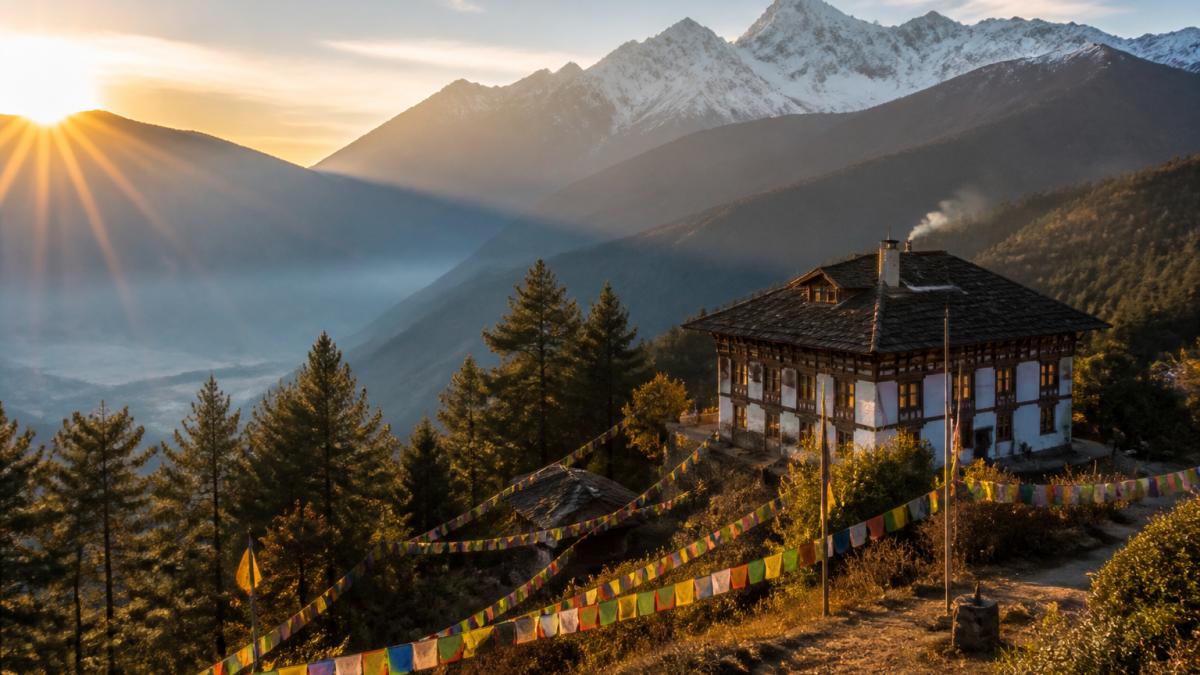
Intimacy, Craftsmanship and a Sense of Place
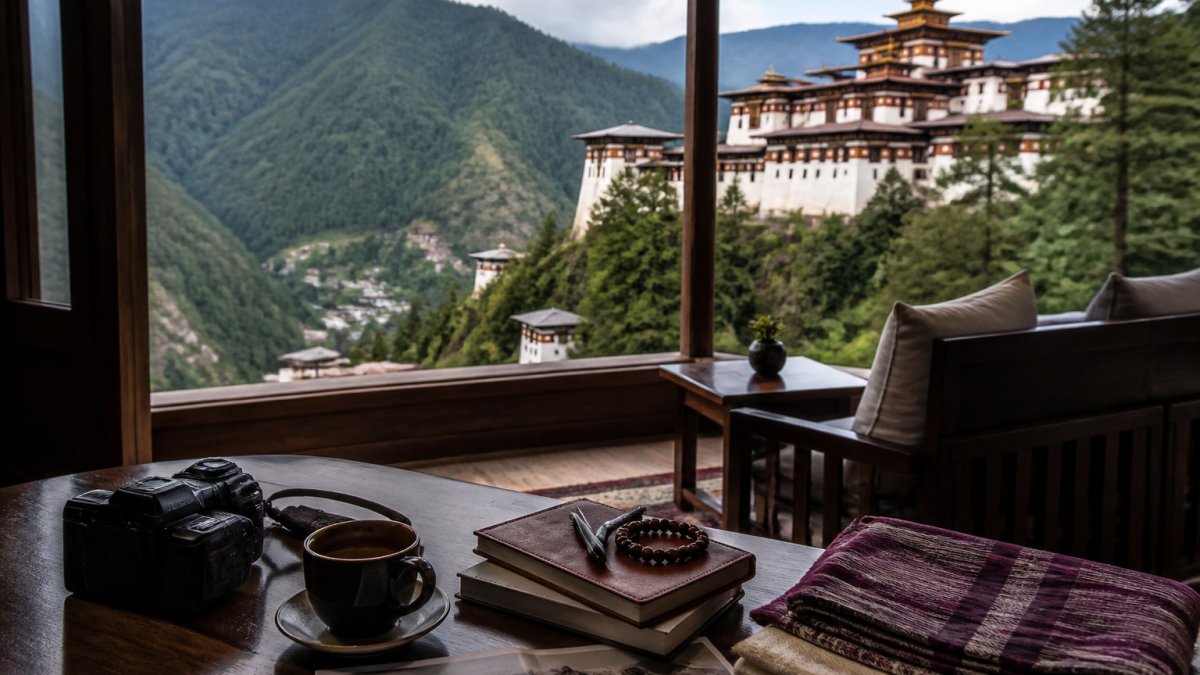
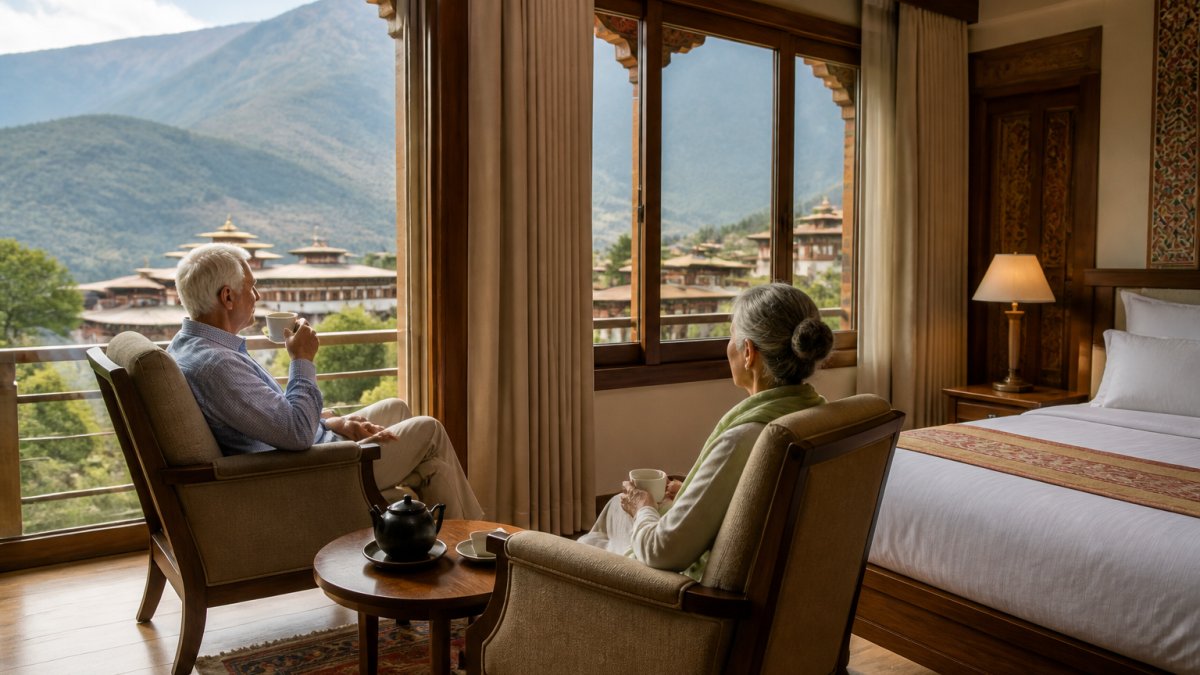
A boutique retreat in Bhutan typically holds fewer than 30 rooms, so the experience stays personal. Hand-carved timber, local stonework and monastery views are standard features, not upgrades. Upscale travellers increasingly ask for authentic, sustainable stays over brand familiarity.
That shift defines the whole category. A handpicked lodge in a pristine valley outperforms a bigger property on atmosphere, even when the room count is lower.
Amankora: The Original Multi-Valley Lodge Circuit
Amankora is a collection of five lodges spread across Paro, Thimphu, Punakha, Gangtey and Bumthang, letting guests travel the country without leaving the brand. It set the template for the multi-valley circuit. Nightly rates run from roughly USD 2,000 to over USD 4,000, so it suits travellers who want unrivalled privacy and fully bespoke excursions.
The trade-off is the price point. For the same budget, smaller luxury boutique hotels offer more varied character across a single stay.
Six Senses Bhutan: Wellness and Sustainable Design Across Five Valleys
Six Senses operates five architecturally distinct lodges, one per valley, each reflecting its local setting. Rates start around USD 1,300 to USD 1,850 per night. Signature spa facilities and sustainable luxury practices are built into daily operations.
If wellness is your priority, this is the most consistent high-end option across regions. The footprint is larger than a classic boutique retreat, so the feel is polished rather than intimate.
COMO Uma Paro, Gangtey Lodge and Dhensa Resort: Intimate Retreats for Couples and Nature Lovers
These three properties sit at the intimate end of the market, and each one solves a different problem: a wellness base close to Paro, a genuinely remote nature stay, and a quiet forest retreat in the Punakha Valley. The detail below is what actually separates them when you are choosing between them.
COMO Uma Paro: Wellness in the Paro Valley
COMO Uma Paro sits on a forested hillside above Paro town, roughly a 10 to 15 minute drive from Paro International Airport and about 20 minutes from Paro town itself.
The wellness offer is the reason most couples book it. The COMO Shambhala Retreat runs a menu of massages, facials and holistic treatments, alongside daily yoga in a dedicated studio.
Practical points worth knowing before you book:
- Altitude: Paro sits at roughly 2,200 metres. Most guests feel fine, but the first night is not the time to schedule a strenuous hike.
- Festival pressure: Paro Tshechu and other peak dates fill the best rooms months ahead. If your trip is built around a festival, secure the room first and build the rest of the itinerary around it.
- Who it suits: Couples who want a spa-led stay with easy access to the airport and Paro's main cultural sites.
Gangtey Lodge: Remote Phobjikha Valley Charm
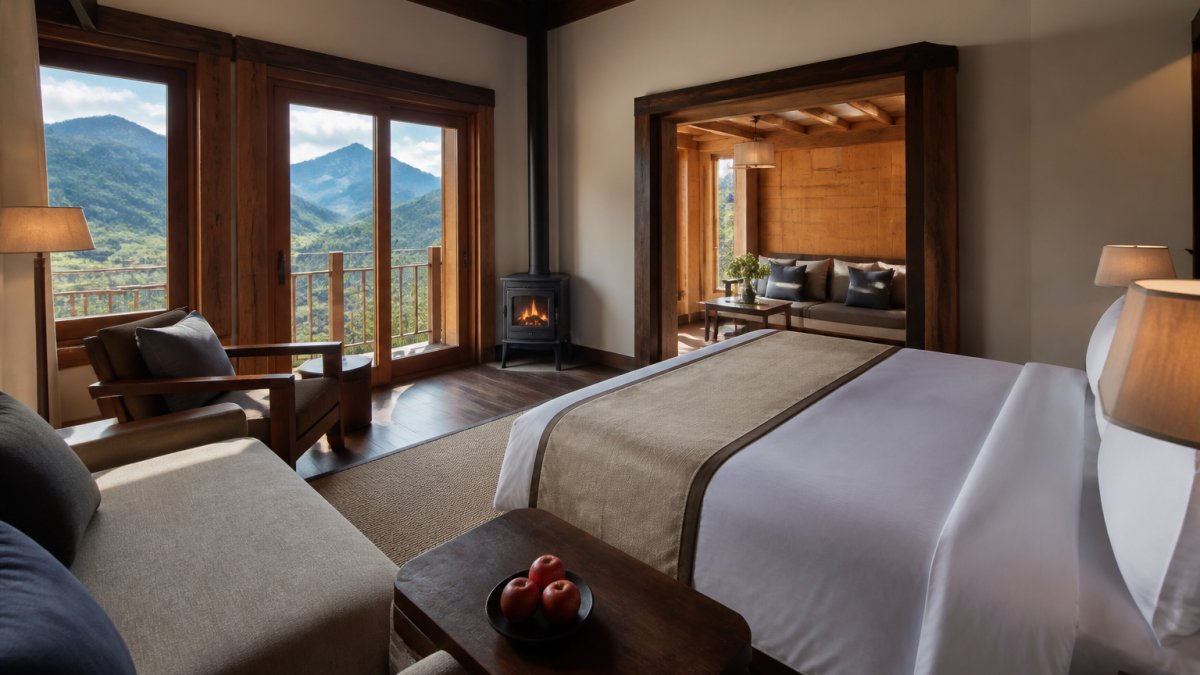
Gangtey Lodge is a farmhouse-style property in the Phobjikha Valley, a glacial valley at around 3,000 metres that is best known as a winter habitat for black-necked cranes. The lodge is small, with wood-burning stoves, deep bathtubs and uninterrupted views across the valley floor.
The trade-off is access. From Paro or Thimphu, the drive to Phobjikha typically takes several hours over mountain roads, and the final stretch is slow.
What to plan around:
- Crane season: The black-necked cranes arrive in the valley in the colder months, generally from late autumn through early spring. If the birds are the reason for your visit, time the trip accordingly.
- Altitude and cold: At around 3,000 metres, nights are cold for much of the year. Pack accordingly, even outside winter.
- Who it suits: Nature lovers and couples who value quiet, walking and landscape over proximity to towns.
Dhensa Resort: A Forest Sanctuary in Punakha
Dhensa Resort sits among pine forest above the Punakha Valley, with an on-site spa and wide valley views. Punakha is lower and warmer than Paro or Thimphu, which makes it a comfortable mid-itinerary stop and a good contrast to the colder valleys.
This is a deliberately low-key property. The activity list is shorter than at larger resorts, and the appeal is the setting, the spa and the quiet rather than a packed programme.
What to plan around:
- Warmer climate: Punakha's lower altitude means milder temperatures, so it is often the most comfortable valley on a winter itinerary.
- Road time: The drive from Paro or Thimphu to Punakha crosses a high pass. Allow a half day rather than treating it as a short hop.
- Who it suits: Travellers who want a calm, forested base in Punakha with a spa and easy access to the valley's main sites.
How to Choose Between Them
A simple way to decide:
- Choose COMO Uma Paro if wellness, spa time and airport convenience matter most.
- Choose Gangtey Lodge if you want the most remote, nature-led stay and are willing to trade travel time for it.
- Choose Dhensa Resort if you want a quiet, warm-weather base in Punakha with a spa and valley views.
A common pattern among travellers is to combine two of the three rather than picking one, using Paro as the arrival and departure base and adding either Phobjikha or Punakha in the middle. That keeps the driving manageable and gives each property enough time to justify the journey.
Bhutan Spirit Sanctuary, Naksel and Zhiwa Ling: Wellness, Eco-Luxury and Heritage
Bhutan Spirit Sanctuary: Traditional Medicine and All-Inclusive Wellness
Bhutan Spirit Sanctuary runs an all-inclusive model with unlimited spa treatments and programmes built around traditional medicine. It sits in the Neyphu Valley with views of the Eutok Samdrup Choling monastery. This is a specialist choice, not a standard hotel stay.
Naksel Boutique Hotel & Spa: Eco-Conscious Comfort in Paro
Naksel combines traditional architecture with energy-efficient design and a full-service spa. Rooms look toward the Mount Jomolhari range. It sits slightly outside Paro town, which keeps things quiet.
Zhiwa Ling Heritage: Hand-Carved Craftsmanship and Local Heritage
Zhiwa Ling Heritage is locally owned and showcases intricate hand-carved woodwork, an on-site temple and meditation house, and extensive gardens. The design leans traditional rather than modern, which is precisely the appeal.
Are Boutique Hotels in Bhutan Covered by Travel Insurance?
Most comprehensive travel insurance policies cover stays at licensed Bhutanese hotels, but cover depends on your policy, not the property. Check that your insurer covers trekking, high altitude and medical evacuation before you travel. Smartraveller travel insurance guidance advises Australians to read the product disclosure statement carefully. We recommend confirming cover in writing before booking.
Best Time to Visit Bhutan for Luxury Travel
Most guides tell you the same thing: come in spring or autumn. That is broadly right, but it is not useful on its own, because the best time to visit depends on which valley you are staying in and what you want to do there. This section maps the seasons to specific regions and to the kind of luxury stay that works in each.
The Two Peak Windows
March to May brings warming temperatures, clear mountain views and the rhododendron bloom at higher elevations.
September to November brings post-monsoon clarity, some of the sharpest mountain views of the year, and the main autumn festival season.
Both windows share the same practical consequence: the best boutique properties in Paro, Thimphu and Punakha fill months ahead, and festival dates drive demand more than the weather does.
What the Shoulder and Off Seasons Actually Offer
December to February is cold, particularly in Paro, Thimphu and the higher valleys, but it is quiet and often clear. Two advantages stand out:
- Punakha and other lower valleys are at their most comfortable, because the milder climate at lower altitude makes winter the best time to be there.
- Phobjikha Valley is at its most interesting for wildlife, since the black-necked cranes overwinter in the valley during the colder months.
June to August is the monsoon. Rain is heaviest in the lower valleys, roads can be affected by landslides, and mountain views are less reliable. That said, the rain shadow areas in the centre of the country are drier than the south, and luxury properties are often quieter and better value. If you are flexible and prioritise the property over the views, this can work.
Matching Season to Region
A practical way to think about it:
| Season | Best Regions | Why |
|---|---|---|
| March to May | Paro, Thimphu, Punakha, Bumthang | Rhododendron bloom, clear views, festival season |
| June to August | Central valleys (rain shadow) | Drier than the south, quieter properties |
| September to November | Country-wide | Post-monsoon clarity, main festival season |
| December to February | Punakha, Phobjikha, lower valleys | Milder temperatures, crane season, fewer crowds |
Why Festivals Drive the Calendar More Than Weather
For luxury travellers, the single biggest scheduling factor is not the weather but the festival calendar. Paro Tshechu, Thimphu Tshechu and Punakha Drubchen are the dates that fill the best rooms first, and accommodation in those towns can be committed many months in advance.
The practical sequence most experienced planners follow is:
- Choose the festival or season you want.
- Secure the lodge in that town first.
- Build the rest of the itinerary around it, accepting that you may need to shift a valley or a night.
Shifting a lodge is straightforward. Shifting a festival is not.
A Note on Altitude and Acclimatisation
Season affects comfort, but altitude affects how you feel. Paro, Thimphu and Punakha sit at moderate elevations, while Phobjikha and parts of Bumthang are higher. Whatever the season, plan the first day or two at lower intensity and avoid stacking a high-altitude stay immediately after arrival.
Seasonal and festival guidance from the national tourism authority
Building a Luxury Travel Itinerary in Bhutan
A strong luxury travel itinerary in Bhutan moves slowly: two to three nights per valley, one lodge at a time. Pair Paro and Thimphu with Punakha, then add Gangtey or Bumthang if time allows. We build itineraries this way because rushing between valleys undoes the point of a serene, high-end stay.
| Trip Length | Valleys to Include | Best For |
|---|---|---|
| 5-7 days | Paro, Thimphu, Punakha | First-time visitors |
| 8-10 days | Add Gangtey or Bumthang | Wellness and culture |
| 12+ days | Full five-valley circuit | Deep immersion |
Frequently Asked Questions
Are boutique hotels in Bhutan covered by travel insurance?
Most comprehensive travel insurance policies cover accommodation costs if you need to cancel or interrupt your trip due to covered reasons, such as illness or natural disasters. However, not all policies automatically include boutique hotel stays, especially remote lodges. Check that your policy covers the full prepaid amount, including any non-refundable deposits. Some high-end lodges also require medical evacuation coverage due to their remote locations. Always read the product disclosure statement and confirm coverage before booking.
What is the difference between a luxury lodge and a boutique hotel in Bhutan?
A luxury lodge typically refers to a smaller, remote property focused on nature and seclusion, such as Gangtey Lodge in the Phobjikha Valley. A boutique hotel is usually in or near a town, offering personalised service, distinctive design and a limited number of rooms, like Naksel Boutique Hotel & Spa. Both offer high-end amenities, but lodges often prioritise wilderness access and intimate experiences, while boutique hotels may provide easier access to cultural sites and dining.
Do luxury boutique hotels in Bhutan offer all-inclusive packages?
Some do. Bhutan Spirit Sanctuary operates on an all-inclusive model that covers meals, unlimited spa treatments and wellness activities. Amankora and Six Senses Bhutan offer packages that bundle accommodation, meals and guided excursions, but these vary by season and itinerary. Many boutique properties also provide half-board or full-board options. Because packages change, it is best to request a current inclusions list directly from the hotel or through a travel specialist.
What is the best time of year to book a luxury boutique stay in Bhutan?
The peak seasons for luxury travel in Bhutan are spring (March to May) and autumn (September to November), when the weather is clear and festivals like Paro Tsechu take place. These months offer the best conditions for trekking and mountain views, but boutique hotels book out months in advance. Winter (December to February) is quieter and cooler, while summer (June to August) brings monsoon rain. For the widest choice of rooms, reserve six to nine months ahead.
Are there sustainable luxury boutique hotels in Bhutan?
Yes. Six Senses Bhutan integrates sustainable practices such as energy-efficient design and local sourcing across its five lodges. Naksel Boutique Hotel & Spa uses eco-friendly construction and operates with a strong environmental commitment. Bhutan itself follows a high-value, low-impact tourism model, so many boutique properties prioritise conservation. When booking, ask about specific initiatives like waste reduction, community employment and renewable energy use to ensure your stay aligns with your values.
Planning a high-end trip here means navigating operator rules, permits and remote lodge logistics, and that complexity is where most itineraries go wrong. Iconic Bhutan Travels A Pristine Journey handles the planning for you, from bespoke itineraries and handpicked lodges to immersive cultural experiences delivered with elegance. Get started with Iconic Bhutan Travels A Pristine Journey and travel Bhutan with confidence.