 comparison
Remote Lands vs Amulet Bhutan: Luxury Travel Comparison
Table of Contents
- Remote Lands vs Amulet Bhutan: A Direct Comparison
- Bhutan Luxury Travel Itinerary: What Each Operator Offers
- Bhutan Sustainable Development Fee Explained
- Private Guided Tours Bhutan: Depth of Cultural Access
- Logistical Planning for Remote Regions
- Where Each Operator Wins: Use-Case Recommendations
- Frequently Asked Questions
Last Updated: September 27, 2026
Remote Lands vs Amulet Bhutan: A Direct Comparison
Choosing between Remote Lands vs Amulet Bhutan comes down to one question: do you want an international luxury brand managing your Himalayan trip from New York, or a Bhutan-based specialist handling it from Thimphu? Both operators run private, high-end journeys into the kingdom. The difference is where the expertise sits. This guide breaks down the operating models, itineraries, costs and cultural access, so you can see exactly what each approach delivers.
Remote Lands is a US-based luxury travel company that designs bespoke Asian itineraries, including Bhutan, using a network of in-country partners. Amulet Bhutan is a Bhutanese tour operator that builds tailor-made journeys from inside the kingdom, working directly with local guides, lodges and monastic contacts.
How Their Operating Models Differ
Remote Lands operates as a designer and coordinator. You brief a US-based team, they build the itinerary, and Bhutanese ground partners deliver it. That model works well when Bhutan is one stop on a longer Asia trip, because the same company manages Japan, Vietnam and Bhutan in one booking.
Amulet Bhutan runs the opposite structure. Planning, permits, guiding and on-the-ground delivery all happen inside the country. When something changes, a weather delay on a mountain pass or a monastery closing for a ceremony, the person fixing it is local.
| Factor | Remote Lands | Amulet Bhutan |
|---|---|---|
| Base of operations | International | In-country |
| Trip scope | Multi-country Asia | Bhutan-focused |
| Ground delivery | Local partner network | Own local team |
| Best for | Multi-stop Asia itineraries | Deep single-country trips |
What This Means for Your Trip
The model you pick shapes your entire experience. An international coordinator gives you one point of contact across several countries, which suits complex multi-destination travel. A local operator gives you faster responses and deeper relationships with lodges, guides and village hosts.
For a Bhutan-only journey, local delivery usually wins. Travel within the kingdom involves mountain roads, high passes and permit checkpoints, and local knowledge matters most when plans shift. If you are combining Bhutan with Nepal or India, an international coordinator reduces the admin burden.
Bhutan Luxury Travel Itinerary: What Each Operator Offers
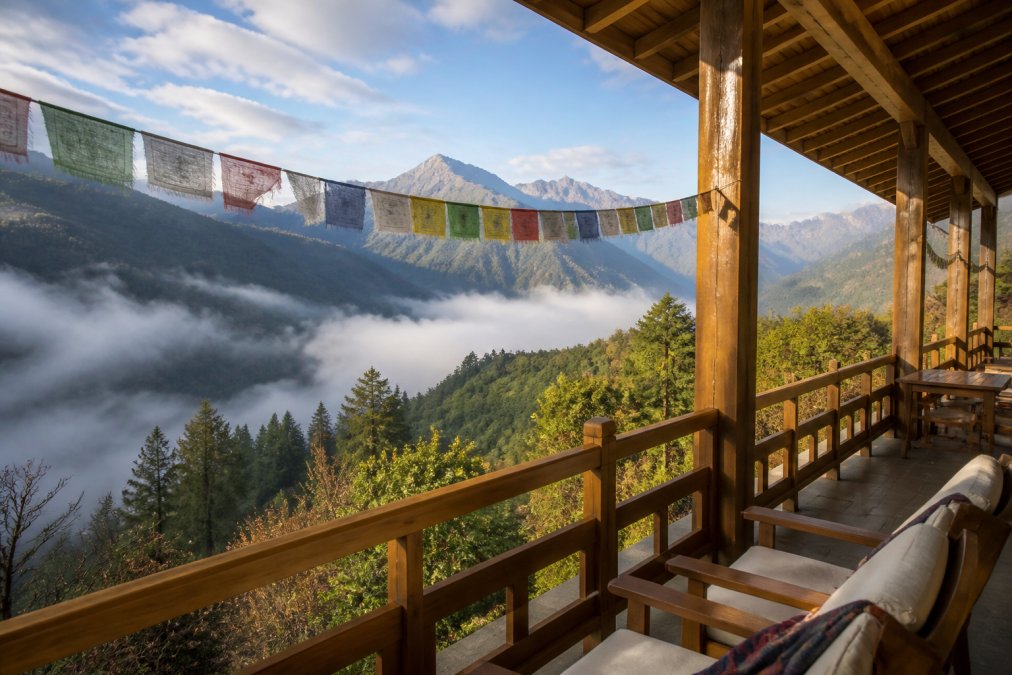
A luxury itinerary in Bhutan should balance iconic sites with quiet, uncrowded experiences. Both operators deliver the classics, Paro Taktsang (the Tiger's Nest hike), Punakha Dzong at the river confluence, and the Dochu La pass with its 108 chortens, but the real difference lies in pacing, property selection and how much of the itinerary is genuinely custom.
Itinerary Style and Pacing
Remote Lands tends toward polished, structured itineraries built around premium hotels and private vehicles. A typical Bhutan leg is short, often three to five nights slotted between other Asian stops, with comfortable pacing and a predictable daily schedule. That suits travellers who want a well-managed plan and a single point of contact across several countries.
Amulet Bhutan builds slower trips with more time in a single valley. A common pattern is two or three nights in the Paro valley, two in Punakha, and a night or two in the Phobjikha valley or Bumthang, with longer monastery visits, unhurried village walks and space for spontaneous stops. For cultural immersion, the slower pace usually delivers more.
Property Selection at the Luxury End
Both operators work with the same small pool of high-end properties, because Bhutan's luxury inventory is limited. Expect the names most travellers recognise: Amankora's lodges across Paro, Punakha, Gangtey, Bumthang and Thimphu; Six Senses' five-lodge circuit; COMO Uma Paro and COMO Uma Punakha; and the Zhiwa Ling Heritage in Paro. Beyond those, a handful of boutique farmhouse stays and heritage properties sit outside the international booking systems.
The practical difference is access.
Level of Customisation Available
Both offer tailor-made planning, but the depth differs. International operators customise within a defined framework of hotels and experiences. Local specialists can adjust daily, adding a farmhouse lunch, a hot-stone bath at the end of a trek, or a private blessing ceremony with short notice.
If your priority is a specific festival or a particular lodge, book early, Bhutan's luxury inventory is small and the best dates fill months ahead. If your priority is flexibility, a local operator gives you more room to move.
Bhutan Sustainable Development Fee Explained
The Bhutan Sustainable Development Fee (SDF) is a daily levy that every international visitor must pay, separate from tour costs. It funds conservation, free healthcare and education, and sustainable tourism development across the kingdom. The SDF applies per person, per night, for the full duration of your stay.
How the SDF Affects Your Overall Cost
Because the SDF is charged nightly, it scales directly with trip length. A ten-day journey carries roughly double the SDF of a five-day one. This is the single biggest reason short, focused itineraries can deliver better value than long, loosely planned ones.
Who Handles the SDF Process for You
A licensed Bhutanese operator must arrange your visa and SDF payment as part of your booking. International operators pass this to their ground partners; local operators handle it in-house. Either way, you should never be managing the payment yourself.
Booking flights before your SDF and visa are confirmed is a common and expensive mistake. The SDF is tied to your visa approval, and permits cannot be issued retroactively.
Private Guided Tours Bhutan: Depth of Cultural Access
Private guided tours in Bhutan vary enormously in depth, even at the luxury end. The difference is rarely the guide's qualification, most licensed Bhutanese guides hold a formal tourism licence and speak English well. It is the operator's relationships, and how far those relationships reach beyond the visitor-facing layer.
What "Cultural Access" Actually Means
At the curated level, both operators deliver the same experiences: a guided walk through Punakha Dzong, a visit to the weekend market in Thimphu, a hike to a hillside monastery. These are excellent, and they are what most luxury itineraries include.
The Guide Relationship
A licensed guide is assigned to your trip, but the quality of the relationship between guide and operator matters more than the licence itself. A Bhutanese operator's guides are typically long-term staff who know the operator's monastic and village contacts personally. An international coordinator's guides are usually supplied by a ground partner, which can mean a different guide for different legs and less continuity.
Permits and Access Beyond the Standard Route
Some of Bhutan's most rewarding cultural sites sit outside the standard tourist route and require additional route permits beyond the standard visa. These must be arranged in advance, and the operator's ability to obtain them is a direct measure of its local standing. Ask any operator which additional permits they can arrange, and how far in advance.
Permits for restricted regions cannot be issued retroactively, and some routes close seasonally. If a specific monastery or valley is the reason for your trip, confirm permit availability before you book flights.
Comparing the Two Directly
Remote Lands delivers excellent guiding and premium logistics, but the cultural layer often stays at the curated, visitor-facing level, which is exactly what most travellers want on a multi-country trip. Amulet Bhutan's advantage is depth within the kingdom: longer monastery visits, village meals, artisan meetings and the flexibility to add a ceremony when one is happening nearby.
Logistical Planning for Remote Regions
Bhutan's geography dictates everything. Mountain topography, single-lane passes and unpredictable weather mean travel times are longer than distances suggest. A route that looks short on a map can take half a day.
Where Each Operator Wins: Use-Case Recommendations
Remote Lands wins on multi-country complexity. If Bhutan is one leg of a broader Asian journey and you want a single luxury coordinator across several borders, that model is hard to beat.
Frequently Asked Questions
Is Bhutan a beautiful country?
Bhutan is widely considered one of the most visually striking destinations in Asia. The Himalayan kingdom features dramatic mountain topography, sacred landscapes, and preserved Buddhist architecture. Visitors experience remote mountain regions, traditional craftsmanship, and rural village life that has changed little over centuries. The country's commitment to cultural preservation and conservation efforts means the scenery and heritage remain largely untouched by mass tourism.
What should I look for when choosing a luxury tour operator in Bhutan?
Look for Tourism Council of Bhutan certification, a track record of tailor-made itineraries, and transparent handling of the Sustainable Development Fee. The best operators offer private guided tours, exclusive access to monasteries and festivals, and genuine local community engagement rather than generic group experiences. Ask about guide credentials, luxury accommodation partners, and how they handle travel logistics including permits and remote access.
Does Bhutan require a pre-booked tour for international visitors?
Yes. Independent travel is not permitted for most international visitors. You must book through a licensed Bhutanese tour operator who arranges your visa, Sustainable Development Fee payment, and itinerary. This requirement ensures all visitors have proper guidance and contributes to the country's sustainable travel model. Your operator handles the full booking process including permits and accommodation.
How do luxury travel agencies handle the Sustainable Development Fee in Bhutan?
Reputable operators include the SDF in their quoted package pricing and manage the payment directly with the Tourism Council of Bhutan on your behalf. This removes the administrative burden from you. When comparing operators, confirm whether the SDF is bundled into the total cost or listed separately, and ask how they handle any SDF adjustments if your itinerary changes.
Choosing an operator for a remote Himalayan journey is really a choice about who holds the local knowledge. International coordination suits multi-country trips; in-country expertise suits travellers who want genuine cultural depth. If your priority is authentic Bhutan delivered with luxury and without logistical friction, get started with Iconic Bhutan Travels A Pristine Journey and let our local team design a tailor-made itinerary around your dates, interests and pace.