 blog
blog
Luxury Honeymoon Packages in Bhutan: 2026 Guide
Table of Contents
- What Luxury Honeymoon Packages in Bhutan Include
- Bhutan Honeymoon Itinerary 7 Days: A Private Journey
- Romantic Experiences in Bhutan for Honeymooners
- Are Boutique Hotels in Bhutan Covered by Travel Insurance?
- Visa, SDF and Travel Logistics for Couples
- Sustainable Luxury: High-Value, Low-Impact Travel
- When to Book Your Luxury Honeymoon Package
- Frequently Asked Questions
Last Updated: September 13, 2026
What Luxury Honeymoon Packages in Bhutan Include
Luxury honeymoon packages in Bhutan are private, fully guided journeys combining five-star boutique accommodation, bespoke itineraries and exclusive cultural access under one operator-managed booking. This guide from Iconic Bhutan Travels A Pristine Journey breaks down what they contain, what they cost beyond the headline rate, and how to choose one that delivers a genuine romantic escape.
The kingdom caps visitor numbers and requires every international traveller to book through a licensed local operator, keeping crowds low and making the tailor-made model the norm (tourism.gov.bt).
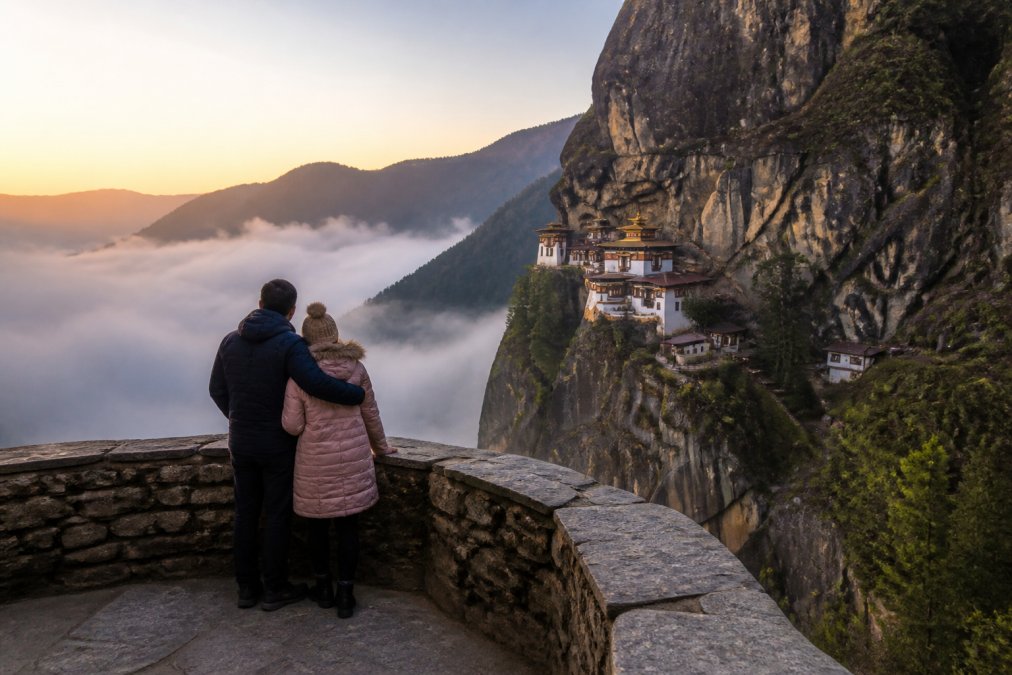
Beyond the Standard Package: Exclusive Inclusions
A standard package covers the permit, guide, driver and three-star lodging. Luxury adds private guided tours with no shared vehicle, hand-picked boutique accommodations and luxury lodges, private transfers, and meals at properties chosen for their kitchen rather than coach-parking capacity.
Exclusive inclusions typically extend to private blessing ceremonies, hot stone baths at your lodge, upgraded suites with valley views, and flexible pacing. Some operators add wellness retreats and spa time.
| Package Tier | Accommodation | Guiding | Transfers | Signature Extras |
|---|---|---|---|---|
| Standard | Three-star hotels | Shared group guide | Shared coach | None |
| Premium | Four-star properties | Private guide | Private car | One cultural dinner |
| Luxury | Boutique luxury lodges | Private guide and driver | Private transfers | Private blessing, hot stone bath, spa credit |
Bhutan Honeymoon Itinerary 7 Days: A Private Journey
A seven-day private honeymoon itinerary typically moves west to east through the Paro and Thimphu valleys before climbing a high pass into the central heartland. Altitude, not distance, sets the pace.
Days 1-3: Arrival, Acclimatisation and Valley Temples
Day one is deliberately light: land at Paro, meet your private guide, transfer to your lodge and rest. Acclimatisation is not optional, and a good operator builds it into the schedule.
Days two and three cover valley temples at an unhurried pace, with private access to monastery architecture and a blessing ceremony before the crowds arrive.
Days 4-7: Mountain Passes, Monasteries and Secluded Retreats
The second half climbs a high pass marked by prayer flags and Himalayan views, then descends into quieter valleys. Expect monastery tours, a cliffside temple walk, and a full day with nothing scheduled but a hot stone bath and long lunch.
Secluded retreats are where luxury operators differentiate. The best itineraries end somewhere private, not in a town.
Romantic Experiences in Bhutan for Honeymooners
Romantic experiences in Bhutan for honeymooners centre on privacy and ritual rather than restaurants and nightlife, precisely the appeal.
Private Blessing Ceremonies and Hot Stone Baths
A private blessing ceremony, arranged with a monastery and conducted by monks, is a highly sought-after honeymoon experience, quiet, personal and unlike anything in conventional luxury travel.
Hot stone baths follow close behind: heated river stones dropped into a wooden tub of herbal water, traditionally taken outdoors. Couples who book a lodge with a private bath often find it to be a memorable experience.
Are Boutique Hotels in Bhutan Covered by Travel Insurance?
Are boutique hotels in Bhutan covered by travel insurance? Generally, no. Travel insurance covers you and your belongings, not the hotel. What matters is whether your policy covers the activities and altitude on your itinerary.
Most comprehensive Australian policies cover medical treatment, evacuation and cancellation. Gaps appear with high-altitude trekking, pre-existing conditions and adventure activities.
Check three things before you pay a deposit:
- Whether trekking above a stated altitude threshold is excluded
- Whether medical evacuation from a remote valley is included
- Whether cancellation cover applies to operator-side changes
The Smartraveller travel insurance guidance sets out what Australian travellers should verify, and the Department of Foreign Affairs and Trade travel advice for Bhutan is worth reading before you finalise dates.
Visa, SDF and Travel Logistics for Couples
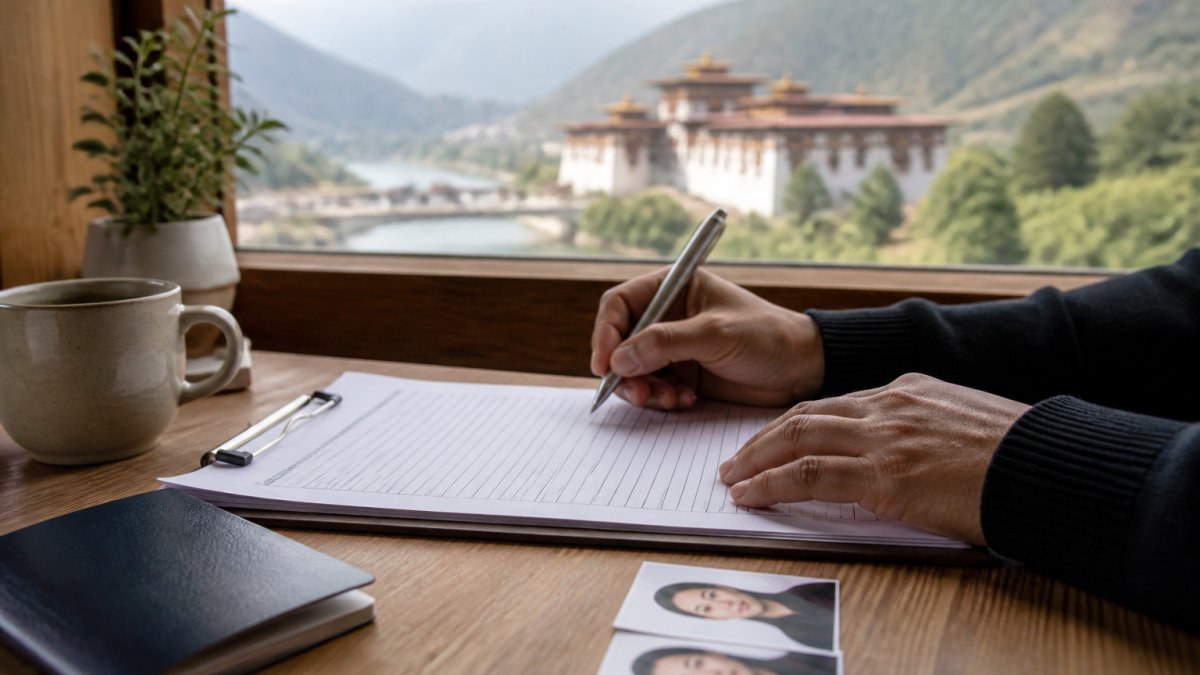
Visa and permit requirements for couples are handled by your licensed operator, and the Sustainable Development Fee is payable per person per night on top of your package. Confirm the current amount with your operator rather than older figures.
Travel logistics are where a good operator saves real effort: permits, route approvals for certain districts, guide and vehicle allocation and internal transfers all sit with them. Your job is flights, insurance and packing.
Sustainable Luxury: High-Value, Low-Impact Travel
Most luxury travel content treats sustainability as a badge you can buy. Here it is a policy you travel inside, understanding the mechanism separates a genuinely low-impact honeymoon from a lodge that simply says the right words.
The policy that shapes every itinerary
The high-value, low-impact model is enforced, not voluntary: visitor numbers are capped, every international traveller must book through a licensed local operator, and a daily Sustainable Development Fee is charged per person per night. Revenue funds conservation, free healthcare and free education, which is why it exists and is not negotiable.
The practical consequence is that you cannot build a cheap, high-volume trip here even if you wanted to. The floor is high, the visitor ceiling low, and the result is valleys that feel quiet even in peak season.
What genuine sustainable luxury looks like on the ground
When you are comparing lodges and operators, these are the concrete signals worth asking about:
- Local employment and training. Ask what proportion of lodge staff are Bhutanese, and whether guiding teams are salaried year-round rather than hired per season.
- Food sourcing. Lodges that grow produce on site or buy from nearby farms reduce import miles, and the difference shows up on the plate.
- Waste and water. Remote valleys have limited waste infrastructure. Properties that compost, treat greywater and avoid single-use plastics are doing real work, not marketing work.
- Vehicle efficiency. A single private vehicle for the whole trip, rather than multiple transfers and separate excursion cars, is the default here and one of the reasons on-the-ground emissions stay low.
- Off-peak routing. Guides who move you through popular monasteries early or late, and who build in quieter valleys, reduce pressure on the sites everyone else visits at 10am.
The trade-off, stated plainly
You will pay more per night than almost anywhere else in Asia and see far fewer tourists. The fee and operator requirement are what make the quiet possible, remove them and the valleys fill up.
Carbon-neutral travel, realistically
No international trip to this region is genuinely carbon-neutral, and any operator claiming otherwise is overselling. What is achievable is a low-emissions ground operation: short internal distances, one vehicle, no internal flights unless genuinely required, and efficiently run lodges. Treat offsetting as a supplement to reducing ground emissions, not a substitute.
For couples who care about this, the appeal is straightforward: a honeymoon that is private, quiet and genuinely low-impact is not a compromise on luxury. It is the version of luxury this country does better than almost anywhere else.
When to Book Your Luxury Honeymoon Package
Timing a luxury honeymoon here is two decisions: which season suits the trip you want, and how far ahead your preferred lodges will be available.
Season by season
Spring (March to May) is the most requested window. Rhododendrons and magnolias flower at mid-altitude, western valley daytime temperatures sit in the mid-teens to low twenties Celsius, and mountain views are reliable before pre-monsoon haze builds. It is also peak wedding season, so the best suites sell out first.
Autumn (September to November) is the connoisseur's choice: post-monsoon air is the clearest of the year, the Himalayan range is most visible from the high passes, and the major tshechu festivals fall in this window. Expect spring-level demand and slightly cooler evenings.
Winter (December to February) suits couples wanting clear skies, low crowds and lower lodge rates. Days are sunny but cold, high passes can close after snow, and some trekking routes are off the table. For a valley-based itinerary with hot stone baths and monastery time, winter is underrated.
Monsoon (late June to August) is the quiet season: afternoon rain, leeches on forest walks and unreliable mountain views. It is the cheapest window and the one most luxury operators steer couples away from unless the trip is spa-and-lodge focused.
Festival timing
Paro Tshechu and Thimphu Tshechu are the festivals most honeymooners build a trip around. They fall in spring and autumn and draw domestic pilgrims as well as visitors, so lodge availability in the host valleys tightens months in advance. If a festival is a priority, treat it as the fixed point and build the itinerary around it.
How far ahead to book
- Peak season (spring and autumn): six to nine months for luxury lodges, longer if you want a specific suite or a festival date.
- Shoulder season (March and November edges, plus early December): three to four months is usually workable.
- Monsoon and deep winter: six to eight weeks is often enough, though permit processing still runs to its own timeline.
Boutique valley properties typically hold only two or three suites, and the most sought-after lodges are smaller still. That scarcity, not flight prices, should drive your booking order.
Packing for the season you chose
Layers do the work here, because a single day can move from a warm valley floor to a cold, wind-exposed pass. A typical spring or autumn luxury packing list includes:
- A warm mid-layer and a windproof outer shell for pass crossings
- Sturdy shoes with grip for monastery steps and uneven temple courtyards
- Modest clothing that covers shoulders and knees for temple visits
- Swimwear if your lodge has a private hot stone bath or spa
- A smart-casual outfit for lodge dinners, where dress codes are relaxed but not absent
Leave formalwear at home. There is no black-tie circuit, and a clean shirt and comfortable trousers are entirely appropriate at the lodges.
Frequently Asked Questions
What is the best time of year for a luxury honeymoon in Bhutan?
March to May and September to November offer clear Himalayan mountain views, mild temperatures and colourful festivals. Spring brings rhododendrons in bloom, while autumn delivers crisp air and the best monastery photography conditions. Winter suits couples who prefer quiet luxury lodges and fewer visitors, though some high passes can be cold. Summer is the monsoon season, with heavier rain and cloud cover that can obscure scenic mountain views.
Are boutique hotels in Bhutan covered by travel insurance?
Check that your insurer covers the full duration of your Bhutan honeymoon itinerary 7 days or longer, and confirm whether high-altitude activities and hot stone baths are included.
What unique experiences are included in luxury honeymoon packages in Bhutan?
Top-tier luxury honeymoon packages in Bhutan typically include private guided tours of monastery architecture, a blessing ceremony with monks, candlelit dinners in secluded retreats, hot stone baths, and tailor-made itineraries with private transfers. Inclusions vary, so request a full itemised list before booking.
How many days are recommended for a luxury honeymoon in Bhutan?
Seven to ten days is ideal for a luxury honeymoon in Bhutan. A 7-day itinerary covers arrival, altitude acclimatisation, key valleys, Tiger's Nest and a romantic experience or two. Ten days allows deeper cultural immersion, a wellness retreat and time in remote valleys. Couples with limited leave can still enjoy a meaningful 5-day trip, though travel logistics and acclimatisation will feel tighter.