 blog
blog
Private Monastery Tours in Bhutan: 2026 Luxury Guide
Table of Contents
- What Makes Private Monastery Tours in Bhutan Different
- Bhutan Monastery Etiquette for Tourists
- How to Pack for Bhutanese Monastery Visits
- Best Time to Visit Bhutan Monasteries
- The Real Cost of Private Monastery Tours in Bhutan
- How to Arrange a Private Monastery Tour in Bhutan
- Frequently Asked Questions
Last Updated: September 14, 2026
What Makes Private Monastery Tours in Bhutan Different
Private monastery tours in Bhutan are customised, guide-led journeys giving one small group exclusive access to sacred sites, monastic rituals and daily life inside working Buddhist monasteries. Unlike fixed group departures, a private itinerary moves at your pace and opens doors coach tours cannot.
This guide from Iconic Bhutan Travels A Pristine Journey covers how these journeys work, what they cost in effort and etiquette, and how to arrange one properly. The difference is not just privacy. It is access.
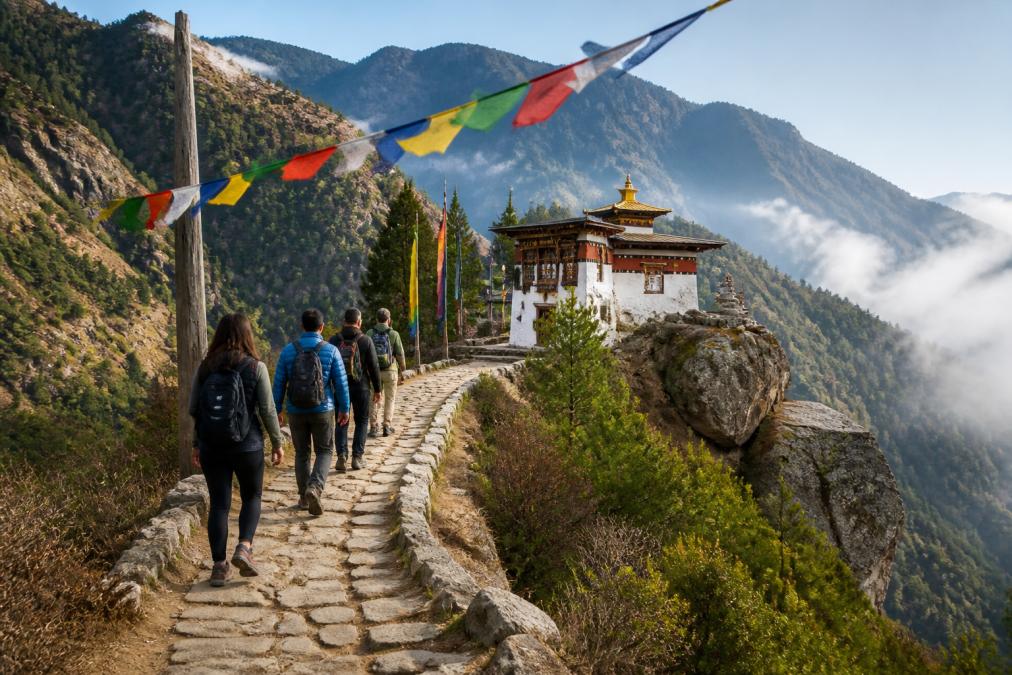
A private guide can arrange a blessing ceremony with monks at a Dzong, time your visit around morning prayers rather than a bus schedule, and route you through Paro Valley, Punakha and Phobjikha on your own timeline, the gap between seeing a monastery and understanding monastic life.
Bhutan Monastery Etiquette for Tourists
Monastery etiquette in Bhutan comes down to three things: dress modestly, move quietly, and never point your feet or a camera where they do not belong. Get these right and monks will often welcome you further in. The detail below separates a respectful visit from an accidental offence inside a working prayer hall.
What to Wear and How to Behave Inside a Dzong
A Dzong is a fortified Buddhist monastery and administrative centre, the spiritual and civic heart of a district. Inside one, you are a guest in an active place of worship, not a museum visitor.
- Cover shoulders and knees; long trousers or a knee-length skirt work well
- Remove hats and shoes before entering temple halls
- Walk clockwise around prayer wheels, stupas and the inner circuit of a temple
- Sit lower than monks and never point your feet toward a shrine or a person
- Keep voices low, and do not touch ritual objects unless invited
- Do not step over monks' cushions, texts or ritual implements on the floor
- If a monk is chanting or in meditation, wait at the edge of the hall rather than walking between them and the shrine
A common mistake is treating a Dzong like a photo backdrop. The monks are working, praying and studying. Watch their cues and follow your guide's lead.
Photography Inside Prayer Halls: What Is Actually Allowed
Photography rules vary hall by hall; assume the main shrine room of a Dzong does not permit cameras. Where photography is allowed:
- Never use a flash near murals, thangkas (scroll paintings) or gilded statues; flash accelerates pigment fading
- Do not photograph monks' faces without asking first, and accept a refusal without negotiating
- Do not photograph during prayer, chanting or ritual, wait for the interval
- Some halls permit photography only of architecture, not of shrines or people
- If a sign, a monk or your guide says no, put the camera away immediately; there is no appeal
Your guide will know which halls currently permit photography, as rules are set locally and change with the abbot.
Offerings, Donations and Monk Interactions
Offerings are welcome, but make them thoughtfully rather than performatively.
- A kata (a white ceremonial scarf) is the appropriate offering when greeting a senior monk or requesting a blessing; your operator can supply one
- Cash offerings go in the designated donation box, not directly into a monk's hand
- Butter lamps can be lit at many shrines for a small donation; ask your guide where this is appropriate
- Do not offer food, alcohol or tobacco to monks
- Do not ask monks for selfies mid-task; if you want a photograph with a monk, ask your guide to request it at an appropriate moment
- A blessing ceremony is arranged through your guide and the monastery, not by approaching monks directly
Women Visitors: Specific Points
A few Bhutanese monastic conventions apply specifically to women visitors, and are rarely spelled out in general travel guides:
- Do not touch a monk or hand an object directly to a monk; place it on a surface or pass it via your guide
- In some temples, certain inner shrines or relic chambers are restricted to men; your guide will tell you in advance so it is not a surprise
- Menstruating women are traditionally asked not to enter the innermost shrine rooms of certain temples; this is a religious convention, not a legal rule, and your guide will advise on the specific site
The Etiquette Mistakes That Actually Cause Friction
The breaches that genuinely upset monks and custodians are rarely about clothing. They are about attention and disruption:
- Talking loudly or taking phone calls inside a hall
- Filming with a phone held above head height during prayers
- Stepping onto raised platforms or into roped-off shrine areas for a better angle
- Touching murals, statues or thangkas
- Leaving litter, including water bottles, on temple grounds
- Arriving in a large group during a private ritual and expecting to stay
How to Pack for Bhutanese Monastery Visits
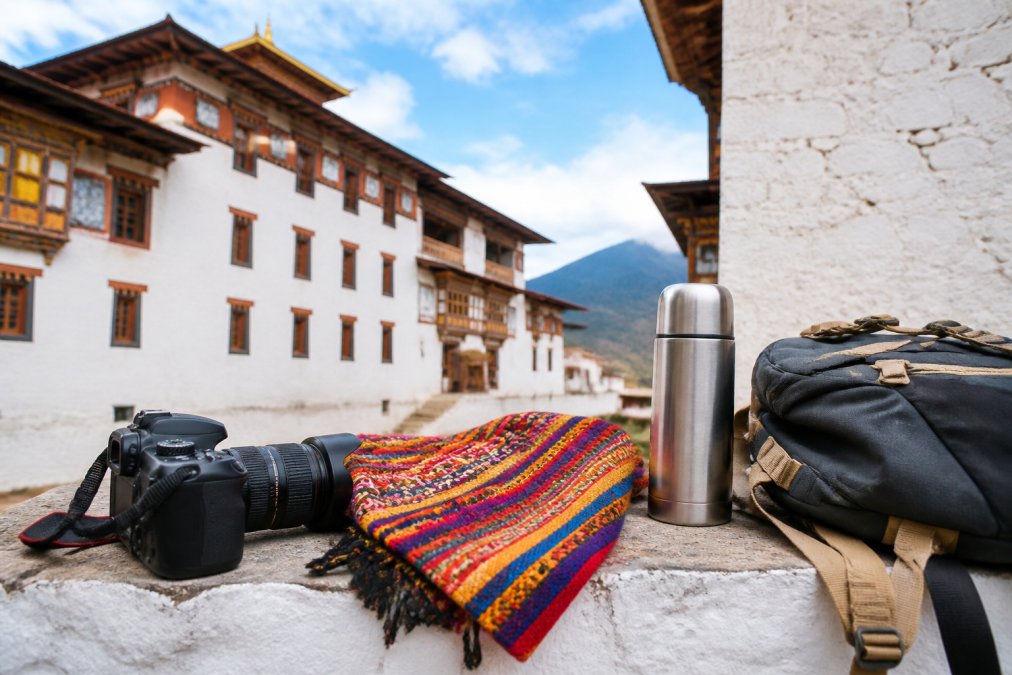
Packing for Bhutanese monastery visits means layering for altitude and weather while keeping one modest outfit accessible for temple entry, you will be taking shoes on and off repeatedly.
- Comfortable, easy-to-remove walking shoes with grip for stone stairs
- A light scarf or shawl to cover shoulders at short notice
- Warm mid-layers and a waterproof outer shell for mountain weather
- Modest long trousers or a long skirt kept separate for monastery days
- A small daypack for shoes, water and a rain cover
- A refillable bottle; plastic waste is discouraged at sacred sites
Leave revealing resort wear at the hotel. Bhutan is conservative, and dressing respectfully earns a warmer welcome.
Best Time to Visit Bhutan Monasteries
The best time to visit Bhutan monasteries is March to May or September to November, when skies are clear and mountain views sharpest, periods that also align with major religious festivals. That is the standard answer, and only half the story. For a private monastery tour, the better question is which monastery you want to be inside, and which festival you want to attend.
Aligning a Private Tour with the Tsechu Calendar
A Tsechu is an annual religious festival held in a monastery courtyard, where masked dances (cham) reenact Buddhist teachings and locals gather in their finest clothing. Attending one is the richest cultural immersion a monastery tour can offer, but dates vary by district and follow the Bhutanese lunar calendar, shifting each year against the Gregorian calendar.
The festivals most relevant to a private monastery itinerary include:
- Paro Tsechu, held in spring at Rinpung Dzong, one of the largest and best-known, with the unfurling of a giant thongdrel (appliqué silk banner) at dawn
- Thimphu Tsechu, held in autumn at Tashichho Dzong, convenient to combine with the capital's monasteries
- Punakha Drubchen and Punakha Tsechu, held in late winter/early spring, with a historical reenactment unique to Punakha
- Jambay Lhakhang Drup, held in Bumthang in autumn, with a fire ritual and masked dances
- Wangdue Phodrang Tsechu, held in autumn, smaller and less crowded than Paro or Thimphu
Because dates are lunar, a private operator builds the itinerary around the festival rather than the reverse, you can shift your dates by a week to catch a specific Tsechu, which fixed group departures cannot do.
A Season-by-Season View for Monastery Visits
| Season | Months | Monastery Experience | Watch Out For |
|---|---|---|---|
| Spring | Mar-May | Clear views, Paro and Punakha festival season | Peak demand, book accommodation early |
| Monsoon | Jun-Aug | Green valleys, fewer crowds, some festivals | Rain, slippery trails, leeches on forest paths |
| Autumn | Sep-Nov | Best visibility, Thimphu and Bumthang Tsechu dates | Busiest window, highest demand for guides |
| Winter | Dec-Feb | Quiet, contemplative, low-season rates | Cold at altitude, some high passes closed |
Winter is underrated for monastery touring: the light is low and clear, crowds are thin, and monks have more time to talk. The trade-off is cold in unheated halls and snow closing the higher passes.
Visiting Monasteries Without Strenuous Trekking
Most seasonal advice assumes you can hike to the famous cliffside sites, excluding a large share of travellers. If your priority is monasteries rather than summits, you can build a rich itinerary on low-effort access:
- Tiger's Nest (Taktsang) can be reached on horseback for the first section of the climb, with the option to stop at the cafeteria viewpoint rather than continue to the monastery itself
- Punakha Dzong, Tashichho Dzong in Thimphu, Rinpung Dzong in Paro and Kyichu Lhakhang are all reachable by vehicle with only short, level walks from the car park
- Bumthang's Jakar Dzong and several valley temples can be visited with minimal walking, though the drive from Paro is long and can be broken with an overnight stop
- Valley-floor monasteries in Phobjikha and Paro allow you to see working monastic life without altitude gain
For travellers with limited mobility, the constraints are vehicle access, steps into each hall, and seating. A private operator can pre-scout each site, build in rest stops, and set a slower pace without holding up a group. Discuss mobility needs at the itinerary stage, some sites cannot be made step-free, and it is better to substitute a reachable monastery than arrive and be turned back.
For more on seasonal timing and festival dates, see the Tourism Council of Bhutan official guidance.
The Real Cost of Private Monastery Tours in Bhutan
The real cost of a private monastery tour depends on group size, trip length, accommodation tier and season, and every visitor must also pay the government's Sustainable Development Fee. That fee is set by the Bhutanese government and changes over time, so check the current amount on the Department of Immigration Bhutan SDF page before budgeting.
Beyond the SDF, your all-in cost covers a licensed local guide, private transport, permits and visa processing, meals, and accommodation from boutique hotels to luxury properties. Because pricing shifts with dates and group size, pricing depends on quantity, dates, and delivery. Please refer to our website for current prices or a quote.
The SDF is not a tax you simply absorb: it funds free healthcare, education and conservation, and underpins Bhutan's high-value, low-volume tourism model. You are paying, in part, for the country to stay unspoiled.
How to Arrange a Private Monastery Tour in Bhutan
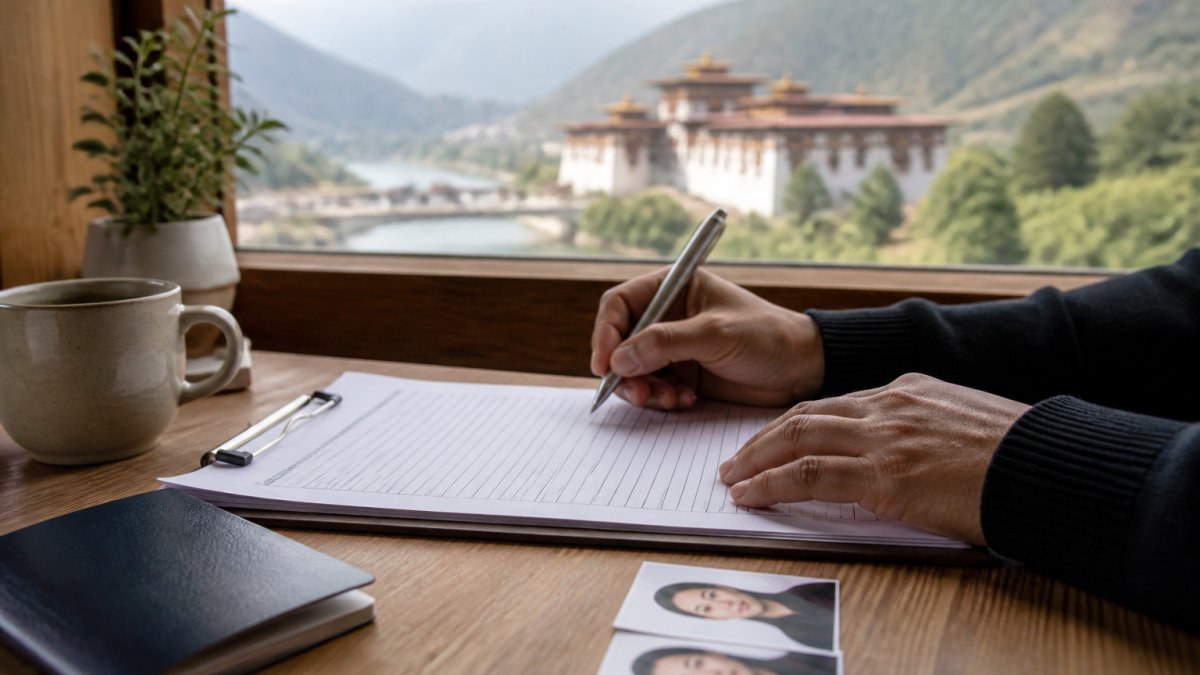
Arranging a private monastery tour in Bhutan requires booking through a licensed local operator, since independent travel is not permitted for most visitors. Your operator handles the visa, SDF payment, permits for restricted regions, and guide allocation.
The process is simpler than it looks:
- Choose your dates and trip length, factoring in festival timing
- Share your interests, fitness level and pace with your operator
- Receive a customised itinerary covering Paro Valley, Thimphu, Punakha and beyond
- Confirm and let your operator process the visa and SDF
- Receive your guide brief and packing guidance before departure
This is where a specialist earns its fee. Iconic Bhutan Travels A Pristine Journey builds customised itineraries with local expert guides, handling visa processing and the SDF so you focus on the experience, not the paperwork. For travellers with limited time, a meaningful five to seven day journey is achievable.
Frequently Asked Questions
How can I arrange a private monastery tour in Bhutan?
You must book through a licensed Bhutanese tour operator, as independent travel is not permitted. A private monastery tour means your guide, vehicle and daily itinerary are exclusive to your group, so you can spend longer at a dzong, request a blessing ceremony, or adjust timings on the day. Share your interests, fitness level and trip length with the operator, and they will handle the Sustainable Development Fee, visa processing and permits on your behalf.
Can international visitors stay overnight in a Bhutanese monastery?
Overnight stays inside working monasteries are rare and depend on the abbot's permission, the monastery's current retreat schedule and your operator's relationships. Some private monastery tours in Bhutan arrange a night at a monastery guesthouse or a nearby farmstay instead, which gives you early morning access to prayer ceremonies without disrupting monastic life. Ask your operator what is genuinely possible for your dates rather than assuming it is guaranteed.
Are there specific dress codes for visiting monasteries in Bhutan?
Yes. Cover your shoulders and knees, remove hats and shoes before entering temple halls, and avoid tight or revealing clothing. Long trousers or a mid-calf skirt, a collared shirt and a light scarf work well for both men and women. Do not point your feet at statues or monks, do not touch sacred objects without invitation, and always ask before photographing inside a shrine room. Bhutan monastery etiquette for tourists comes down to quiet, modest, respectful behaviour.
What makes a private monastery tour different from a group tour?
A group tour follows a fixed departure date and shared vehicle, so your time at each site is set by the itinerary. Private monastery tours in Bhutan give you a dedicated guide and driver, flexible start times, and the ability to add unscheduled stops such as a small village temple or a monk-led meditation session. For travellers wanting depth at Taktsang or quieter monasteries in Punakha and Phobjikha, that flexibility is the main difference.
Private monastery tours reward preparation, and the logistics of visas, the SDF and permits are exactly where a first-time visitor can feel out of their depth. Iconic Bhutan Travels A Pristine Journey handles that complexity for you, pairing licensed local expert guides with customised itineraries, luxury accommodation and genuine access to monastic life. Get started with Iconic Bhutan Travels A Pristine Journey and experience an authentic, unhurried journey through Bhutan's sacred sites.