 ultimate-guide
Transformative Travel Experiences in Bhutan: A 2026 Guide
Table of Contents
- Why Transformative Travel Experiences in Bhutan Stand Apart
- The Philosophy of Mindfulness and Spiritual Awakening
- Tiger's Nest Monastery Hike and Sacred Sites
- Cultural Etiquette for Bhutan Travel and Local Traditions
- How to Pack for Bhutanese Monastery Visits
- Bhutan Sustainable Development Fee Explained and Practical Logistics
- Post-Trip Integration and Sustaining Your Transformation
- Conclusion
- Frequently Asked Questions
Last Updated: September 30, 2026
Why Transformative Travel Experiences in Bhutan Stand Apart
Transformative travel experiences in Bhutan differ fundamentally from conventional tourism. It's about stepping into a culture where mindfulness shapes daily life and the landscape itself shifts your perspective.
Travellers seeking genuine transformation choose Bhutan because the country's philosophy aligns with their search for meaning. Bhutan's commitment to Gross National Happiness over GDP growth embeds slow travel, authentic connection, and inner peace into how society functions.
What sets transformative travel experiences in Bhutan apart is the legal and cultural infrastructure that protects them. The mandatory operator requirement and the Sustainable Development Fee ensure that tourism remains controlled, sustainable, and genuinely immersive rather than diluted by mass-market operations. This isn't a limitation; it's a feature that guarantees the authenticity travellers seek.
The Philosophy of Mindfulness and Spiritual Awakening
Mindfulness in Bhutan is foundational Buddhist philosophy that has shaped the culture for over 1,400 years, not a wellness trend. Understanding this distinction changes how you approach your journey.
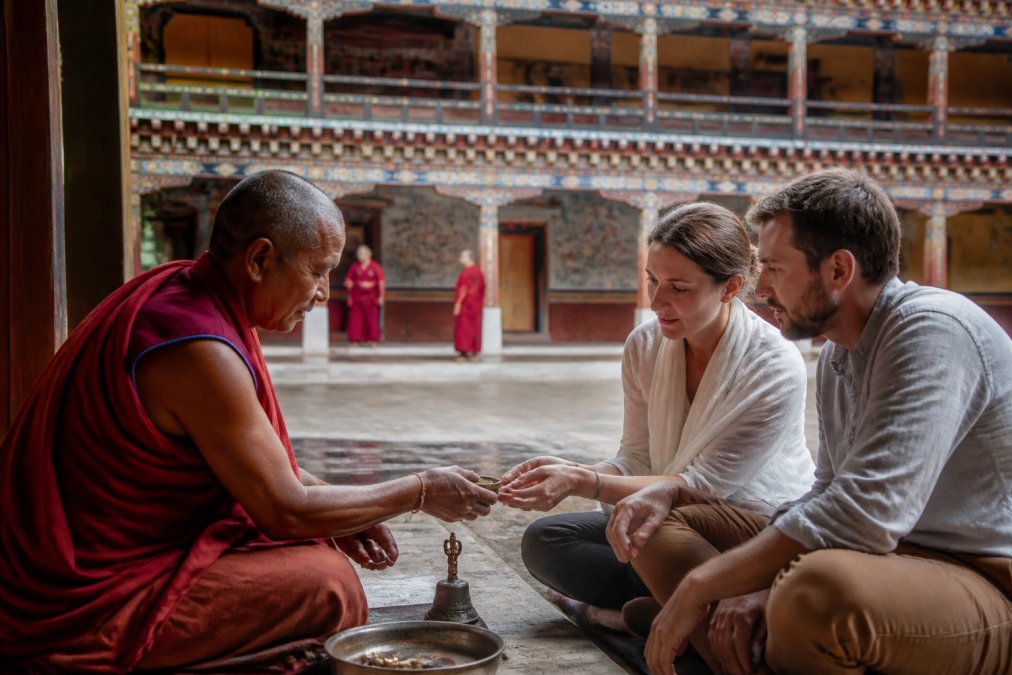
Mindfulness centres on present-moment awareness and intentional living. Monastery visits, meditation retreats, and cultural immersion are expressions of the same principle. When you sit in a monastery courtyard at dawn, you're participating in mindfulness, not performing it.
Spiritual awakening happens when you recognise the destination as a teacher. Many travellers report their most significant insights came in unscripted moments: conversations with guides, watching monks debate philosophy, or sitting alone in sacred sites.
Tiger's Nest Monastery Hike and Sacred Sites
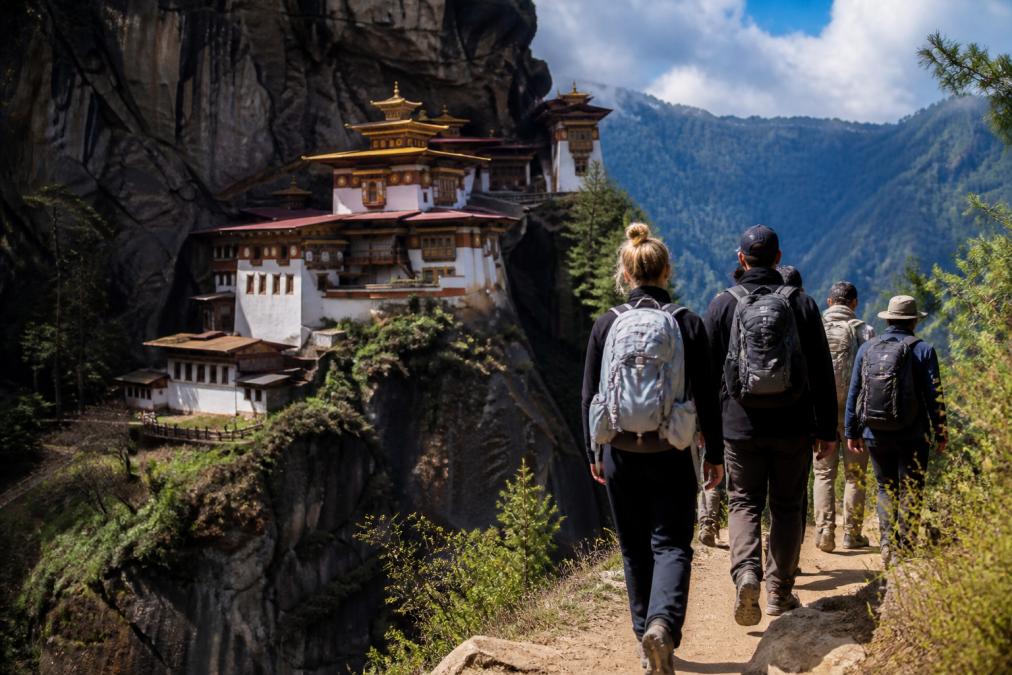
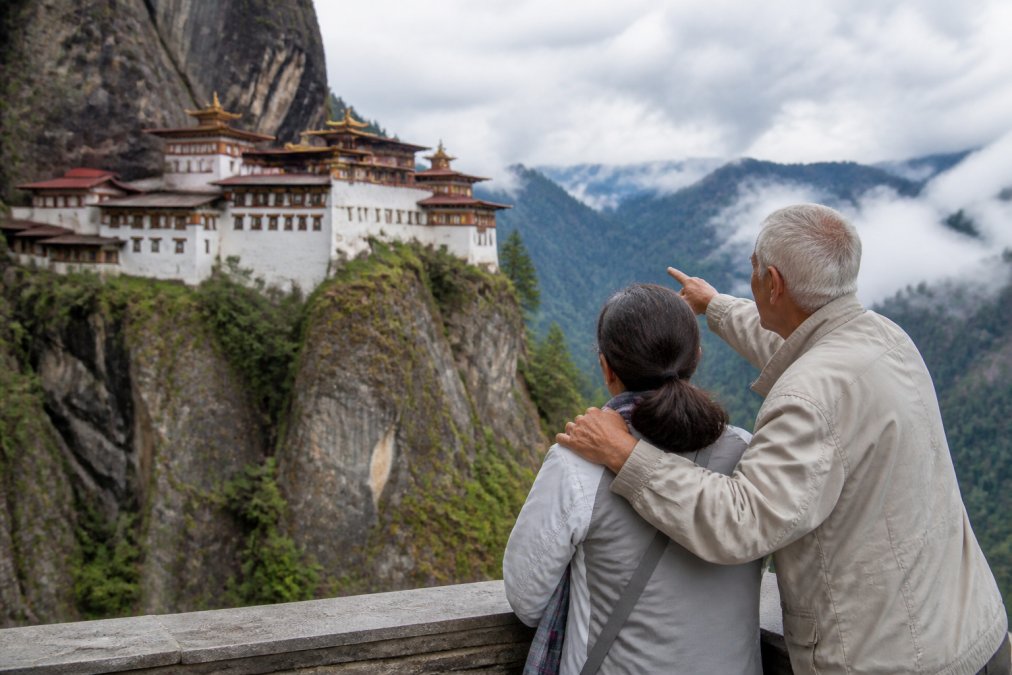
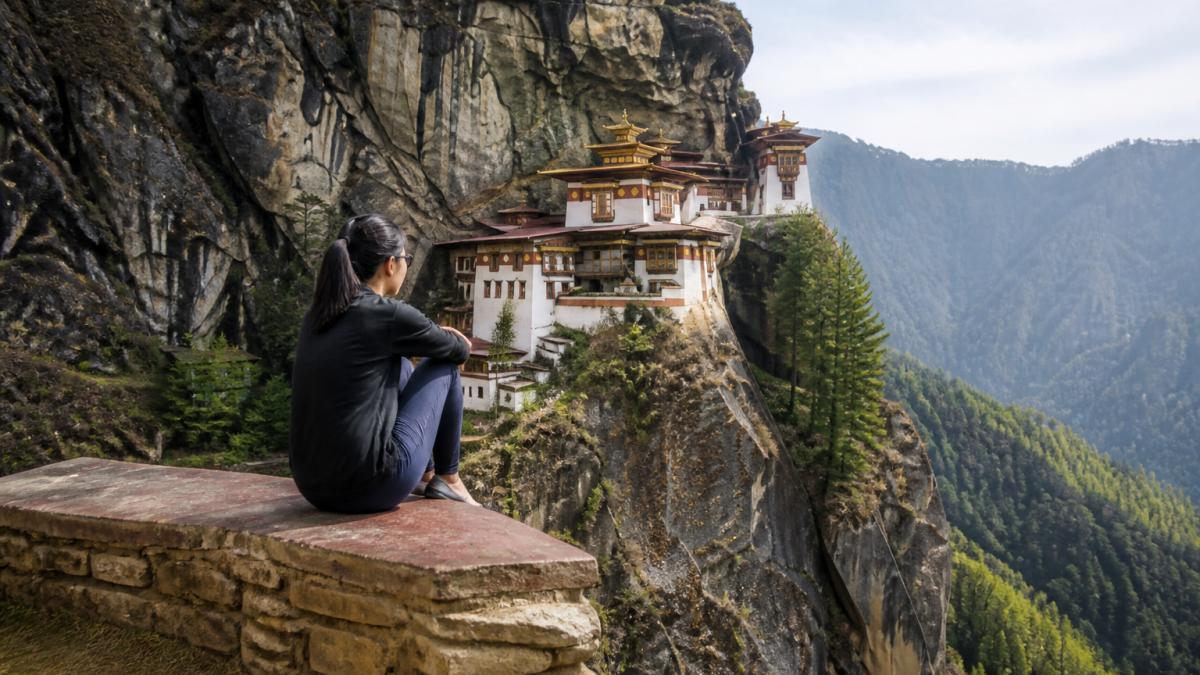
Tiger's Nest Monastery is Bhutan's most recognisable sacred site, but the destination matters far less than the intention you bring to it.
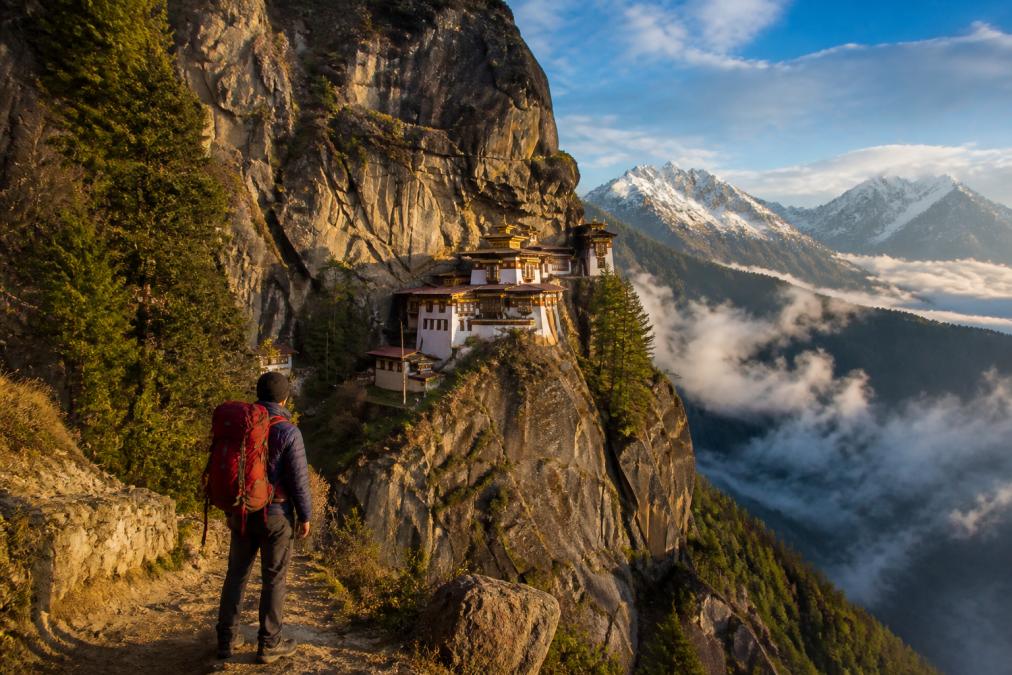
The hike takes three to four hours. The transformative aspect isn't reaching the top, but what the journey teaches about pace, persistence, and presence.
Sacred sites throughout Bhutan anchor contemplative practice. Sites like Drukgyel Dzong, Punakha Dzong, and Chimi Lhakhang hold specific spiritual significance. With a knowledgeable guide, they become gateways to understanding a fundamentally different worldview.
Rushing between sites diminishes value. Real transformation emerges when you spend time sitting and observing, requiring different pacing than typical travel.
Cultural Etiquette for Bhutan Travel and Local Traditions
Respect for local traditions is the foundation of ethical travel and genuine cultural immersion. Understanding unwritten rules transforms how locals respond to you.
Bhutanese culture centres on respect for Buddhist practice, elders, and sacred spaces. Practically, this means removing shoes in temples, walking clockwise around sacred sites, and dressing modestly. These reflect spiritual significance, not aesthetic preference.
Local traditions aren't performed for tourists; you're observing practices communities maintain for themselves. Genuine curiosity rather than consumption deepens conversations and expands access to authentic experiences.
Community engagement works best when you move slowly and listen more than you talk. Asking about daily life and how Buddhism shapes decisions opens doors that superficial tourism never reaches.
How to Pack for Bhutanese Monastery Visits
Packing for monastery visits requires understanding both the physical environment and cultural context. What you bring signals respect for sacred spaces.
Essential items include comfortable walking shoes with good grip, layers for temperature fluctuations, a small bag for items you remove before entering sacred spaces, and binoculars for observing architectural details respectfully.
Pack modest clothing: long trousers or skirts, sleeved shirts, and a light scarf. This honours the sanctity of sacred spaces.
Bring a water bottle, journal, medications, and a torch for early morning visits. Many monasteries are remote with no nearby pharmacies.
Limit phone use in sacred spaces. Photographing everything can disconnect you from the actual experience.
Bhutan Sustainable Development Fee Explained and Practical Logistics
The Sustainable Development Fee maintains Bhutan's commitment to sustainable tourism. Understanding how it integrates with visa requirements and seasonal planning is essential for transformative travel.
The Sustainable Development Fee Structure
Bhutan charges a mandatory daily fee covering environmental conservation, infrastructure, and community development, paid through your licensed operator. This ensures tourism revenue supports heritage preservation and local communities, preventing the overtourism that has damaged other destinations.
Visa Requirements and Timeline
Your licensed operator must apply for your visa through the Department of Tourism, requiring submission of passport details 30 days before arrival (60 days for peak season). Visa clearance typically takes 5-7 business days. This system controls visitor numbers and preserves conditions for transformative experiences.
Seasonal Timing for Spiritual Retreats
Seasonal conditions affect accessibility and experience quality. Autumn (September-November) offers clear skies and optimal visibility; book 3-4 months in advance. Spring (March-May) has fewer crowds. Summer (June-August) brings heavy monsoon rains and inaccessible passes. Winter (December-February) is cold with occasional snow. For meditation retreats, spring and autumn offer the best balance; book 4-6 months in advance.
The Mandatory Operator Requirement and Booking Workflow
All travel must go through a licensed operator. The workflow: (1) Initial consultation with your operator about dates, interests, and transformative goals; (2) Itinerary design with negotiated pacing; (3) Visa application submission; (4) Accommodation and transport confirmation; (5) Guide assignment (request a guide with monastery knowledge if spiritual immersion is your priority); (6) Pre-departure briefing with itinerary, packing list, and altitude advice.
Cost Breakdown and What's Included
The Sustainable Development Fee ranges from AUD 250-290 per day, covering environmental conservation, infrastructure development, and healthcare/education support. Your operator's package includes accommodation, meals, transport, guides, and entrance fees. Budget roughly AUD 3,500-5,500 per person for a 7-day journey.
Why This System Protects Transformation
Mandatory operators, visa controls, and the daily fee prevent mass tourism. You're never competing with thousands of visitors for monastery visits or meditation spaces. This constraint makes transformative experiences possible while supporting communities and conservation.
Post-Trip Integration and Sustaining Your Transformation
The most critical phase of transformative travel experiences in Bhutan happens after you return home, when you integrate what you've learned. Without guidance, transformation often fades within weeks.
Understanding Why Transformation Fades: The Comfort Zone Model
During your time in Bhutan, you operated outside your comfort zone, activating neuroplasticity and creating genuine shifts in perspective. But once home, your brain gravitates back toward familiar patterns. Without deliberate practice, new neural pathways weaken within 2-4 weeks. Transformation becomes lasting only when you create environmental cues and practices that anchor your insights.
The Three Pillars of Sustainable Transformation
1. Immediate Documentation (Days 1-7 After Return)
Within 48 hours of returning, write detailed reflections including specific moments that shifted your perspective, concrete insights about what matters to you, sensory details, and lingering questions. This prevents the experience from becoming a vague memory and creates material to revisit during stressful periods.
2. Environmental Design (Weeks 1-4 After Return)
Redesign your environment to support new behaviours. Create a meditation space with objects from Bhutan. Schedule daily practice (even 10 minutes) attached to existing habits. Connect with others who've travelled to Bhutan or share your mindfulness interest; accountability partners increase follow-through by roughly 65%.
3. Psychological Reframing (Ongoing)
Recognise that transformation isn't a destination you reach in Bhutan and then maintain passively. It's an ongoing process. Your journey there planted seeds; what you do after determines whether they take root and grow.
When you experience moments of frustration, when you slip back into old patterns, when the pace of your home environment feels overwhelming, when you question whether the Bhutanese insights apply to your real life, reframe these as data, not failure. They're signals that you need to adjust your practices or deepen your understanding.
A useful framework: view your transformation as a spiral, not a line.
Practical Integration Practices
The Real Test of Transformation
Conclusion
Transformative travel experiences in Bhutan represent a different category of journey entirely. They're designed not for consumption but for genuine personal evolution, a shift in how you see yourself, others, and what matters.
Frequently Asked Questions
What makes transformative travel experiences in Bhutan different from other luxury destinations?
Bhutan's philosophy of Gross National Happiness prioritises well-being and environmental stewardship over mass tourism. The mandatory operator requirement and Sustainable Development Fee ensure controlled, high-value, low-volume tourism that protects sacred sites and local traditions. This creates genuine cultural immersion rather than transactional sightseeing. Spiritual retreats, monastic life exposure, and intentional engagement with communities foster authentic personal growth that luxury resorts elsewhere cannot replicate.
How does the Bhutan Sustainable Development Fee explained affect my overall travel costs?
The Sustainable Development Fee is a daily tariff paid by all international visitors and supports conservation, education, and healthcare. This fee is separate from accommodation and guide costs. Rather than a hidden expense, it demonstrates your contribution to heritage preservation and environmental stewardship. Pricing depends on season, group size, and accommodation tier. Contact Iconic Bhutan Travels for a detailed quote reflecting your specific dates and preferences.
What cultural etiquette for Bhutan travel should I follow to show respect?
Always circumambulate sacred sites clockwise, remove shoes before entering monasteries, and avoid pointing at religious objects or people. Dress modestly, particularly in spiritual spaces. Accept food and drink with both hands or right hand only. Photography is restricted in certain temples and during ceremonies. Never touch prayer flags or mani stones. Engage with locals respectfully, ask permission before photographing people, and show genuine interest in their customs rather than treating them as photo opportunities. These practices honour the contemplative culture and sacred geography.
Can a 5-7 day trip deliver a truly transformative experience, or do I need longer?
A well-designed 5-7 day itinerary can catalyse meaningful transformation through intentional travel focused on meditation retreats, monastery immersion, and guided cultural encounters. The key is depth over breadth: fewer destinations, more time for reflection, and expert-led interpretation. Tailor-made itineraries prioritise slow travel principles, allowing space for inner peace and contemplative practice. Longer trips deepen integration, but shorter journeys can spark lasting change when structured around personal growth rather than sightseeing checklists.